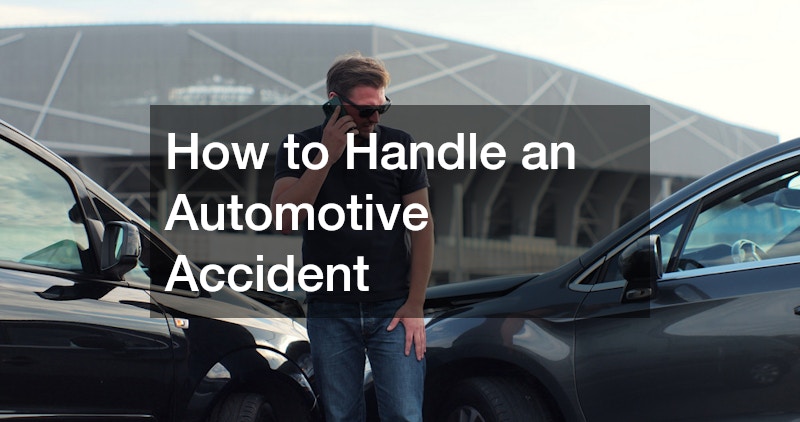
Handling an automotive accident begins the moment impact occurs. The immediate aftermath is often chaotic, but taking deliberate, calm steps ensures your safety, preserves evidence, and protects your legal and financial interests. Understanding how to manage the first critical minutes helps prevent secondary collisions and sets a solid foundation for all insurance and legal actions that follow.
Securing the Area and Checking for Injuries
Your absolute priority after a collision is personal safety. Turn on your hazard lights immediately to warn approaching drivers of the hazard ahead. If the vehicle is drivable and you are in an active traffic lane, carefully move to the shoulder or a nearby parking lot. However, if the crash is severe or anyone appears injured, leave the vehicles where they are and turn off the ignition to eliminate fire hazards.
Check yourself and your passengers for injuries before attempting to exit the vehicle. If someone is severely hurt, keep them calm and do not move them unless there is an imminent danger, such as a vehicle fire or rising water, as improper movement can exacerbate spinal or structural trauma.
- Turn on hazard lights instantly to alert surrounding traffic.
- Move operable vehicles out of primary travel lanes to avoid secondary impacts.
- Verify the physical safety of all occupants before stepping onto the roadway.
- Keep severely injured individuals stationary until emergency medical crews arrive.
Contacting Emergency Services and Filing Reports
Call emergency services immediately, even if the collision seems minor at first glance. Inform the dispatcher of your exact location, the number of vehicles involved, and any visible injuries so they can dispatch appropriate medical and law enforcement personnel. Having official responders present ensures an unbiased assessment of the scene and keeps the area orderly.
When officers arrive, provide a clear, factual account of what happened without speculating or taking blame. Request the officer’s name, badge number, and the official police incident report number. Official documentation serves as an essential foundation when you later file claims or need to hire an accident lawyer to protect your rights.
- Dial 911 immediately to request police and medical assistance.
- Provide clear location details and describe any ongoing hazards to the dispatcher.
- Stick strictly to objective facts when detailing the event to investigating officers.
- Obtain the officer’s contact details and the report identifier before leaving.
Documenting Evidence and Exchanging Information
Gathering comprehensive evidence at the scene is critical for insurance claims and potential legal disputes. Use your smartphone to take high-resolution photos and videos from multiple angles, capturing vehicle damage, road conditions, skid marks, traffic signals, and weather elements. Photograph surrounding street signs or landmarks to establish the precise physical context of the collision.
Exchange personal details with all involved drivers, including full names, contact phone numbers, driver’s license numbers, insurance providers, and policy numbers. Speak politely but strictly limit conversation to factual information exchange. Avoid discussing fault or making polite apologies at the scene, as these statements can be misinterpreted as admissions of liability during later investigations.
- Capture photos of all vehicle damage, skid marks, and road conditions.
- Photograph license plates, street signs, and traffic control devices nearby.
- Collect full contact and insurance details from every driver involved.
- Avoid discussing fault, making excuses, or apologizing to other parties.
Medical Evaluation and Post-Accident Care
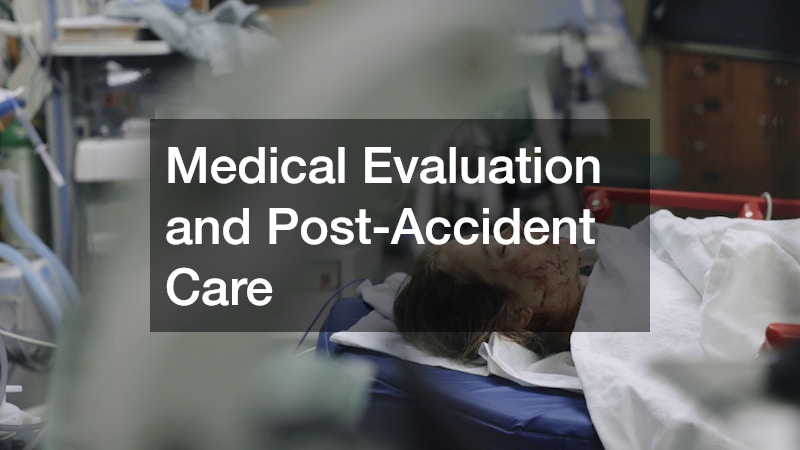
Physical injuries from a vehicle collision do not always manifest instantly. Adrenaline and shock often mask severe pain, stiffness, or soft-tissue damage for hours or even days after the incident, making delayed medical evaluation risky for both your health and your legal claim.
Seeking Immediate Medical Treatment
Even if you walk away from the crash feeling uninjured, schedule a comprehensive medical evaluation right away. Emergency room physicians or primary care doctors can identify internal trauma, concussions, or subtle soft-tissue sprains that require early intervention. Hidden injuries left untreated can gradually worsen over time, leading to prolonged recovery periods and chronic discomfort.
Timely medical records create an unbroken chain of documentation directly linking your injuries to the collision. Insurance adjusters frequently scrutinize gaps in care to argue that injuries were sustained elsewhere or were not severe. This clear medical history is vital if you later consult an auto injury attorney to seek reimbursement for medical bills and lost wages.
- Visit a hospital or primary care physician immediately after leaving the scene.
- Report every physical symptom, no matter how minor it may initially seem.
- Follow all recommended diagnostic steps, including X-rays or MRI scans.
- Keep detailed files of medical records, prescription receipts, and doctor notes.
Addressing Spinal and Musculoskeletal Trauma
Whiplash, spinal misalignment, and joint strains are among the most frequent injuries caused by the sudden force of a crash. The violent whipping motion of the neck and torso can strain delicate ligaments, misalign vertebrae, and create inflammation that restricts normal movement. Seeking specialized musculoskeletal care can significantly reduce long-term stiffness and chronic pain.
Working with a car accident chiropractor helps realign the spine, restore joint mobility, and reduce inflammation caused by sudden deceleration. Specialized spinal adjustments, soft-tissue therapy, and targeted exercises target the underlying structural imbalances. Consistent follow-up care and adherence to prescribed treatment plans ensure complete recovery while documenting the full extent of your physical therapy needs.
- Schedule a specialized spinal evaluation to check for hidden misalignment.
- Undergo targeted adjustments to relieve joint tension and spinal pressure.
- Participate in recommended rehabilitation exercises to rebuild mobility.
- Maintain continuous care records to prove the necessity of your treatment.
Navigating the Claims Process
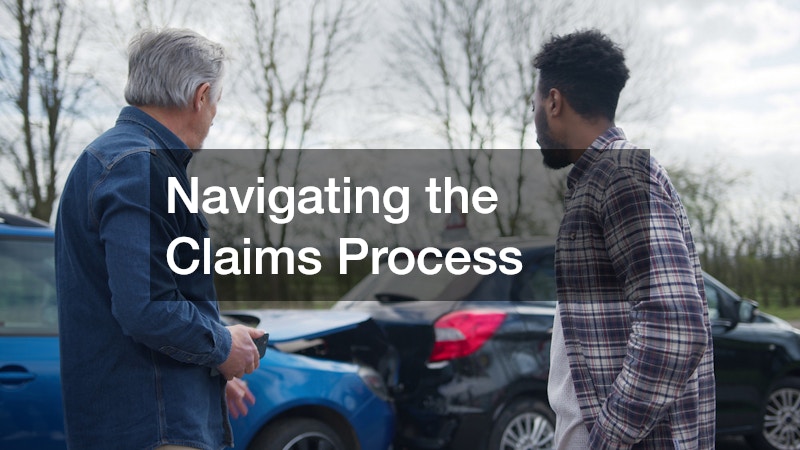
Dealing with insurance companies requires patience, precise documentation, and strategic communication to ensure you receive fair compensation for property damage and bodily injuries. Understanding the procedures keeps you from falling into common claim pitfalls.
Reporting the Crash to Insurance Providers
Notify your insurance carrier as soon as possible after the event. Provide the agent with the factual details, the police report number, and contact information for all involved parties. Be completely honest about the events, but stick strictly to known facts rather than guesses or assumptions. Prompt notification accelerates the processing of your claim and avoids policy non-compliance issues.
If the other driver’s insurance adjuster calls you, refrain from giving a recorded statement until you have reviewed your records thoroughly or consulted a legal representative. Adjusters are trained to ask targeted questions that may induce you to say things that diminish the perceived severity of your claim.
- Report the incident to your insurer promptly to initiate the claims process.
- Supply accurate details, police report details, and witness contacts.
- Decline to give recorded statements to third-party adjusters without preparation.
- Track every conversation by noting dates, agent names, and call summaries.
Protecting Your Legal Rights and Financial Recovery
Insurance companies frequently attempt to minimize payouts or settle claims quickly before the full extent of damages or injuries becomes clear. Accepting an early settlement release forever waives your right to claim additional compensation, even if medical complications arise later. Having professional legal representation ensures that your rights are safeguarded throughout the negotiation process.
An experienced legal professional can accurately calculate future medical costs, property losses, and pain and suffering while negotiating directly with adjusters. They evaluate complex liability factors and ensure all damages are properly valued. This intervention prevents you from accepting an inadequate initial settlement that fails to cover long-term costs.
- Refuse premature settlement offers before your full recovery outlook is clear.
- Calculate total financial losses, including future treatment and wage loss.
- Engage legal representation to handle high-stakes negotiations with adjusters.
- Review all legal documents thoroughly prior to signing final releases.
Vehicle Assessment and Mechanical Restoration
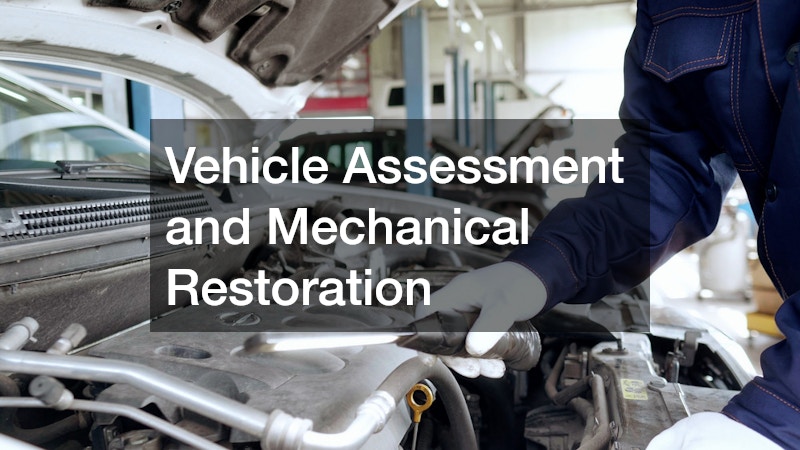
Restoring your vehicle to pre-accident condition requires a thorough physical inspection beyond surface-level dent repairs. Hidden structural and mechanical damage can compromise vehicle safety, driving stability, and overall longevity if left unaddressed.
Addressing Structural and Drivetrain Damage
High-impact crashes can cause structural distortion, frame damage, and severe mechanical issues. Structural components, suspension arms, and internal engine mounts often absorb significant energy during a crash. Unseen frame bends can alter vehicle dynamics, causing severe instability at higher highway speeds.
Qualified mechanics must inspect the drivetrain and internal mechanical systems to repair bent frames, broken axles, or compromised cooling systems. In cases where the crash causes severe mechanical trauma to the engine block, radiator, or internal components, specialized technicians may need to perform complex auto engine repairs to make the vehicle roadworthy again.
- Request a complete frame inspection to detect structural misalignments.
- Examine cooling systems, radiators, and engine mounts for impact stress.
- Perform comprehensive mechanical repairs on damaged internal components.
- Verify that all mechanical systems function smoothly before taking delivery.
Evaluating Transmission and Drivetrain Health
The sudden, violent stop of a collision can strain or fracture internal transmission components, fluid lines, and gear assemblies. Impact shock can crack transmission casings or cause internal gear teeth to shear under severe pressure. Symptoms like delayed shifting, slipping gears, fluid leaks, or unusual burning smells indicate internal transmission failure.
When internal damage is extensive, simple fluid flushes or minor repairs are insufficient. Complete disassembly and an auto transmission rebuild may be required to restore proper gear ratios, torque delivery, and internal pressure levels, ensuring long-term reliability and driveability.
- Check transmission fluid levels and inspect casing housings for leaks.
- Test drive the vehicle to evaluate shifting smoothness and gear engagement.
- Rebuild internal planetary gears and clutches when structural damage occurs.
- Flush and replace transmission fluids to remove residual metallic debris.
Correcting Suspension and Steering Geometry
Impacts with other vehicles, curbs, or debris frequently knock the vehicle’s suspension geometry out of specification. Even minor alignment deviations force steering components to work harder, accelerating tire wear and degrading handling predictability. Driver control becomes heavily compromised during sudden evasive maneuvers or emergency stops.
Improper suspension alignment leads to uneven tire wear, compromised handling, and pulling to one side while driving. Bringing your vehicle to a technician for a precision wheel alignment ensures that the angles of the tires match factory specifications, restoring predictable steering response and vehicle stability.
- Inspect tie rods, control arms, and struts for bends or hairline fractures.
- Measure camber, caster, and toe angles using computer alignment tools.
- Adjust steering alignment back to the original manufacturer’s parameters.
- Replace severely worn or bent suspension components to ensure safety.
Exterior Repair and Refinishing
Once the mechanical and structural systems are restored, attention turns to repairing cosmetic damage, glass, and exterior finishes. Quality craftsmanship during this stage restores both aesthetic appeal and resale value.
Repairing Windows and Windshields
Cracked, shattered, or chipped glass reduces structural integrity and impairs visibility. Windshields provide essential structural support to the passenger cabin during rollover events, making timely glass restoration vital for passenger protection. Modern windshields also house sensor arrays for advanced driver-assistance systems that require precise calibration after replacement.
Contacting a service specializing in local auto glass repair ensures that safety glass is installed using high-grade adhesives and that lane-assist sensors are re-calibrated correctly to factory specifications.
- Inspect all vehicle glass for minor cracks, chips, or structural stress lines.
- Replace damaged windshields using high-quality glass and structural adhesives.
- Recalibrate advanced driver-assistance sensors attached to the windshield glass.
- Verify that all window seals are airtight to prevent water and wind leaks.
Sourcing Quality Replacement Components
Collisions frequently destroy outer body panels, bumpers, headlight assemblies, and structural brackets. Using inferior panels can lead to uneven body gaps, improper door latching, and premature rust formation over time. Ensuring high-quality replacement parts are used during the rebuild is critical for passenger safety and vehicle value retention.
Repair shops should always source certified original equipment manufacturer or high-grade aftermarket auto parts to guarantee fitment, structural strength, and corrosion resistance.
- Insist on original equipment manufacturer components for exact panel fitment.
- Inspect replacement panels for proper alignment along body seams.
- Verify that bumper covers and crush zones meet structural safety standards.
- Ensure replacement lighting units feature proper factory wiring and sealing.
Protecting Paint and Surface Finishes
After body panels are repaired, straightened, and repainted, preserving the fresh paintwork from environmental elements, road debris, and minor scratches is essential. Fresh clear coats require protection to maintain their deep shine and resist premature fading caused by ultraviolet exposure.
Applying a high-grade paint protection film over vulnerable front-end panels creates an invisible physical barrier that guards against rock chips and maintains the vehicle’s cosmetic appearance over time.
- Allow new paint coats to cure fully before applying protective coatings.
- Apply clear protective films over vulnerable areas like hoods and bumpers.
- Wash the vehicle regularly using soft microfiber towels and pH-neutral soap.
- Avoid automated car washes that use harsh bristle brushes on new paint.
Managing Transportation and Towing Services
When a vehicle is rendered unsafe or inoperable following an accident, arranging safe transportation for the damaged vehicle becomes an immediate logistical concern. Prompt action prevents additional roadside damage and unwanted storage fees.
Safe Extraction and Vehicle Removal
Leaving an immobilized vehicle on a highway shoulder poses severe safety risks to passing traffic and leaves the car vulnerable to secondary impacts or theft. Unattended vehicles are often impounded by local authorities, resulting in steep administrative penalties and daily storage charges.
Professional towing services are required to safely extract the vehicle from the scene and transport it to a certified repair facility or storage lot. Always confirm where your vehicle is being taken and retain all receipts, as these emergency transportation costs are generally reimbursable through your insurance policy.
- Call licensed transport operators equipped with appropriate flatbed tow trucks.
- Confirm the destination address with the driver before loading the vehicle.
- Remove all personal belongings, documents, and valuables from the cabin.
- Keep detailed receipts for towing services to submit with your insurance claim.
Navigating the aftermath of a vehicle collision requires a calm, systematic approach to protect your health, rights, and property. By prioritizing immediate safety at the scene, securing detailed documentation, seeking prompt medical evaluation, and overseeing comprehensive vehicle repairs, you ensure a complete physical and financial recovery. Taking proactive steps today prepares you to handle unexpected road emergencies with confidence and clarity.